
πŸŽ‰ National Days Library Books β€’ Writing β€’ Family Fun Explore all days β†’

Fall

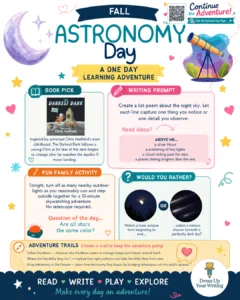
Astronomy Day

Learning Adventure

Look up, wonder big, and explore the Moon, stars, and mysteries of the night sky.

Curated by Laela
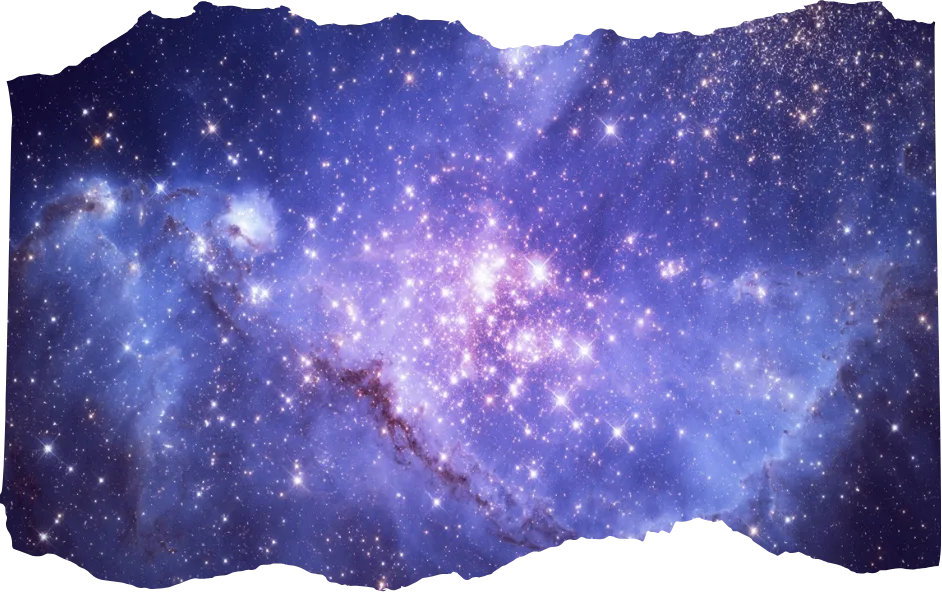
a vibrant night sky
Look Up!
πŸ“Œ Quick FactsπŸ“… September 19🌍 Celebrated Worldwide ⭐ Born in California in 1973
❀️ Why We Celebrate

Astronomy Day began in 1973 with a wonderfully simple idea: instead of asking people to travel to observatories, astronomers brought telescopes into busy public places where people already were. Today, the celebration encourages people around the world to discover the Moon, planets, stars, and universe beyond our own backyard.

πŸ’‘ Did You Know?

Look up from a truly dark place and you may see the Milky Way with your own eyes... the same glowing band the ancient Romans called Via Lactea, or β€œMilky Way.”

✨ Adventure Highlights
✏️ List Poetry πŸŒ™ Moon Phases πŸ”­ Stargazing πŸ’‘ Light Pollution

ο»Ώ
1

Read

πŸ“–

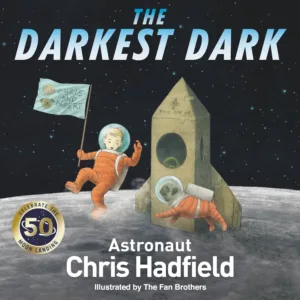
The Darkest Dark

by Chris Hadfield and Kate Fillion

What if darkness wasn’t something to fear, but something that allowed you to discover an entire universe?

Inspired by astronaut Chris Hadfield’s own childhood, The Darkest Dark follows a young Chris as his fear of the dark begins to change after he watches the Apollo 11 moon landing. It’s a wonderful reminder that sometimes looking more closely at the darkness reveals just how much there is to discover.

As you read, notice how differently darkness can feel depending on what you imagine might be waiting there.
πŸ“– View Book
2

Write

✏️
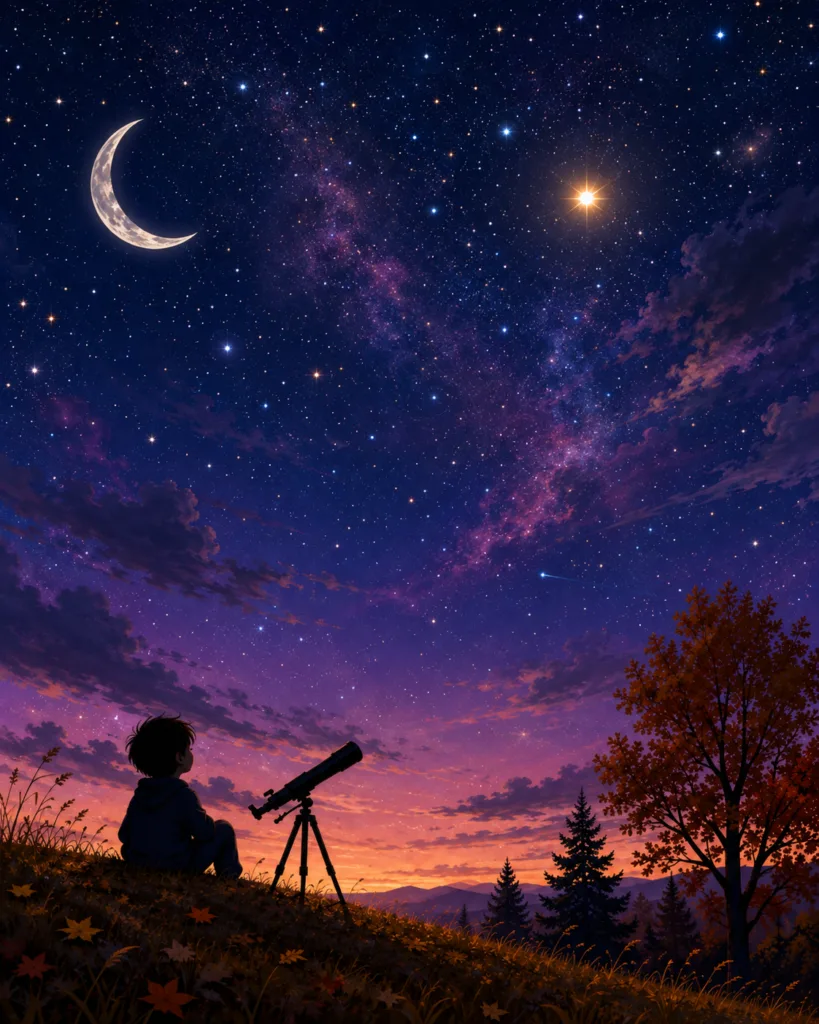
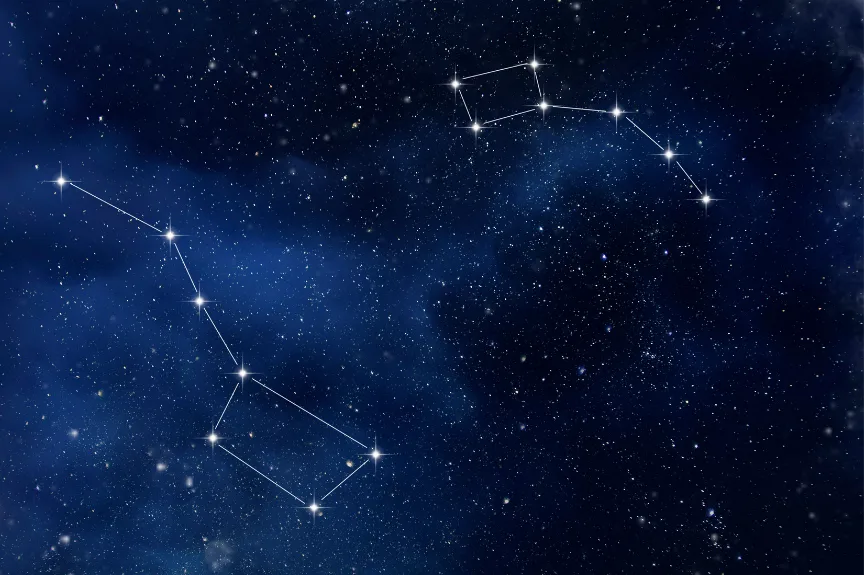
Create a list poem about the night sky. Let each line capture one thing you notice or one detail you observe. Use the picture below for inspiration, or look up at the real sky above you.

For example:

Above me…
a silver Moon
a scattering of tiny lights
a cloud sliding past the stars
a planet shining brighter than the rest

Need a Little Inspiration?
Look closely.Β  Notice shapes, colors, brightness, movement, and patterns. Your poem does not need to rhyme. Each line can be short and simple.

3

Family Fun

πŸŽ‰
picture of night sky with big dipper and little dipper highlighted

Lights Out, Look Up

Tonight, turn off as many nearby outdoor lights as you reasonably can and step outside together for a 10-minute skywatching adventure.

No telescope required.

Look for:

  • πŸŒ™ The Moon, if it’s visible
  • ⭐ The brightest object you can find
  • ✨ Groups or patterns of stars
  • 🌌 Darker and brighter areas of the sky

Then compare what everyone noticed.

Try this: Walk to a slightly darker part of your yard or neighborhood. Can you suddenly spot stars that were harder to see near brighter lights?

Artificial light can make faint stars much more difficult to see, which makes this an easy real-world introduction to light pollution.

πŸ’œ Resources We Love Β· Some links are affiliate links that support DUYW at no extra cost to you.
🌎 Adventure Trails

Every adventure has another path to follow. Choose a trail and see where your curiosity leads!

Space Trail: Follow the Moon

The Moon seems to change shape throughout the month as it travels around Earth. Explore the eight Moon phases and discover why a first-quarter Moon looks half lit.

Wonder Challenge: Look up tonight’s Moon phase. Is the illuminated portion growing or shrinking?

History Trail: Bring Astronomy to the People

Astronomy Day began in California in 1973 when Doug Berger helped bring telescopes out of observatories and into places where ordinary people could discover the sky for themselves.

Wonder Challenge: Find an astronomy club, observatory, or planetarium near you. What opportunities do they offer for public stargazing?No nearby options? Explore how the Maya tracked the sky, Polynesian navigators followed the stars, or ancient Chinese astronomers recorded comets and eclipses. Which approach interests you most?

Science Trail: Where Did the Milky Way Go?

Under truly dark skies, the Milky Way can be seen with the naked eye… but artificial light now hides it from nearly 80% of people in North America.

Wonder Challenge:
Compare a light-pollution map with a regular map. Where is the darkest place you can find near your home?

Would you rather...

OR

Print & Plan

Printable Lesson Snapshot

Keep today’s book pick, writing prompt, family activity, and discussion ideas together in one colorful overview.

View & Print This Adventure Perfect for homeschool or classroom planning.

πŸŒ™ Share Your Spark!

Today’s conversation: Has your family ever seen something in the night sky that made everyone stop and look?

πŸ’¬οΈ
Family Friendly

Every comment is reviewed before it's published.

β™₯

Be kind. Be helpful.
Be inspiring! πŸ’›

Add Your Spark

Your comment will appear after it has been reviewed.

πŸ’› Be the first to share your spark!

Keep Exploring

This Fall Astronomy Day learning adventure for grades 2–6 combines poetry, skywatching, moon phases, stargazing history, star color, and light pollution in one curiosity-filled homeschool lesson.