



πŸŽ‰ National Days Library Books β€’ Writing β€’ Family Fun Explore all days β†’

Look for an Evergreen Day

Learning Adventure

Look closely at winter’s greenest survivors and discover what makes evergreen trees extraordinary.

Curated by Laela
look for an evergreen day
Stay Evergreen!
πŸ“Œ Quick FactsπŸ“… December 19πŸ‡ΊπŸ‡Έ Celebrated in the US 🌲 Credited to the National Arborist Assoc.
❀️ Why We Celebrate

When most deciduous trees have dropped their leaves, evergreen trees become some of the easiest plants to notice in the winter landscape. Look for an Evergreen Day is a perfect excuse to step outside, spot a splash of green, and discover how these trees make it through cold weather.

πŸ’‘ Did You Know?

Evergreens can end up in the kitchen, too! Pine trees give us edible seeds called pine nuts, while cloves are flower buds from an evergreen tree and star anise is the fruit of another.

✨ Adventure Highlights
✏️ Precise Word Choice πŸ”¬ Winter Adaptations πŸŽ„ Christmas Evergreens 🌎 Evergreen Giants

ο»Ώ
1

Read

πŸ“–

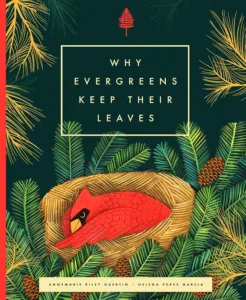
Why Evergreens Keep Their Leaves

by Annemarie Riley Guertin

Why do fir, spruce, and juniper trees stay green when so many other trees lose their leaves? This beautifully illustrated folktale imagines an answer through the story of a little redbird searching for shelter before winter arrives. As you read, notice which trees offer the bird a home, then compare the story’s explanation with the real science behind evergreen leaves.
πŸ“– View Book
2

Write

✏️
Choose an evergreen tree, branch, cone, or photograph and describe it so clearly that someone else could picture it without using the words tree, green, pine, or evergreen.What does it look like? How would the needles or leaves feel? Does the bark look rough, flaky, scaly, deeply grooved, or something else? If you were standing beside it, what might you smell or hear?End your description with:What am I?

The Evergreen Mystery

Pretend your reader has never seen your evergreen before. Instead of saying green needles, could you describe their shape, shine, texture, or arrangement? Look for details someone else might miss: tiny scales, prickly tips, papery bark, sticky sap, woody cones, or branches dusted with snow.

3

Play

πŸŽ‰
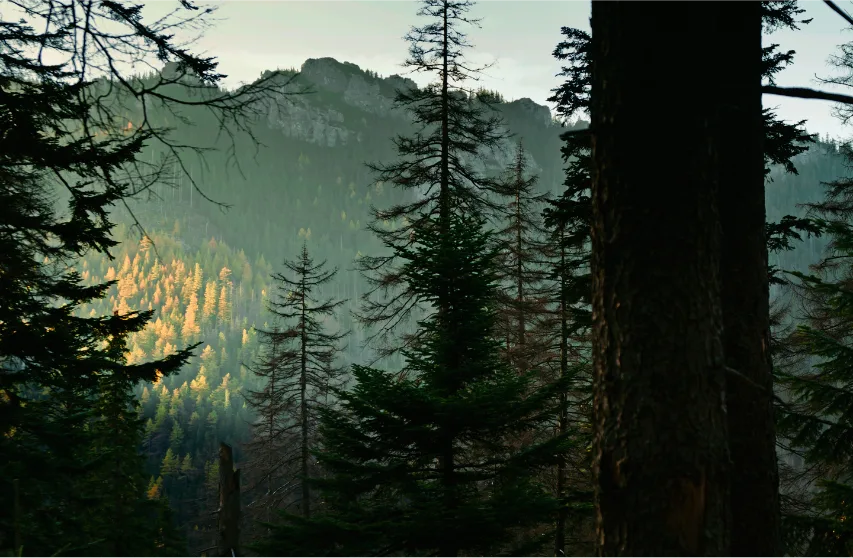
evergreen forest

Go on an Evergreen Hunt

Bundle up for a quick walk around your yard, neighborhood, park, or even a garden center and see how many different evergreens you can spot.

Look closely rather than simply counting trees. Do you see:

  • Needles growing individually or in bundles?
  • Flat leaves instead of needles?
  • Cones, berries, or seeds?
  • Smooth, scaly, or deeply grooved bark?
  • Different shades of winter green?

Take a photo of your most unusual find and see if you can identify it when you get home.

Family Conversation: Which evergreen was easiest to recognize? Which one made you look twice?

πŸ’œ Resources We Love Β· Some links are affiliate links that support DUYW at no extra cost to you.
🌎 Adventure Trails πŸ“Œ Open the World Explorer Map

Every adventure has another path to follow. Choose a trail and see where your curiosity leads!

Science Trail: Built for Winter

Broad leaves and evergreen needles both release water through a process called transpiration, but their shapes and surfaces are very different. Narrow needles and waxy coatings can help evergreens conserve water when the ground is cold or frozen.

Wonder Challenge:
πŸ’§ Place a leafy twig and an evergreen twig inside separate clear plastic bags and seal each around the stem. Leave them in the same sunny spot and watch for condensation. Which one releases more water?

Nature Trail: Meet the Christmas Evergreens

Many popular Christmas trees are evergreens, but they are not all the same. Firs, spruces, and pines can look surprisingly different when you compare their needles, cones, branches, and shape. Other evergreens, such as holly and juniper, may look nothing like a traditional Christmas tree at all.

Wonder Challenge:
πŸ” Compare a fir, spruce, and pine. What clues could you use to tell them apart?

Geography Trail: Evergreen Giants

Some of America’s most remarkable evergreens grow in the West. California’s coast redwoods are the tallest trees on Earth, while ancient bristlecone pines grow high in the mountains of the Great Basin. Farther north, Washington is known as β€œThe Evergreen State” because of its abundant evergreen forests.

Wonder Challenge:
πŸ—ΊοΈ Find California, Nevada, and Washington on a map. How might the climate and landscape of each state affect the kinds of evergreens that grow there?

Bonus Trail: Evergreens in the Kitchen

Evergreen plants do more than stay green all winter. Pine trees give us edible seeds called pine nuts, cloves are dried flower buds from an evergreen tree, and star anise is the star-shaped fruit of another evergreen.

Some evergreen plants even help flavor holiday foods. Follow that connection into our Gingerbread House Day Learning Adventure, where spices travel from trees and plants around the world into one very sweet tradition.

Wonder Challenge: Look up pine nuts, cloves, and star anise before they are harvested. Which one looks most different from the ingredient you recognize in the kitchen?

Would you rather...

OR

Print & Plan

Printable Lesson Snapshot

Keep today’s book pick, writing prompt, family activity, and discussion ideas together in one colorful overview.

View & Print This Adventure Perfect for homeschool or classroom planning.

Keep Exploring