

🎉 National Days Library Books • Writing • Family Fun Explore all days →

International

Francophonie Day

Learning Adventure

Follow French around the world through borrowed words, shared stories, and a little language adventure.

Curated by Laela
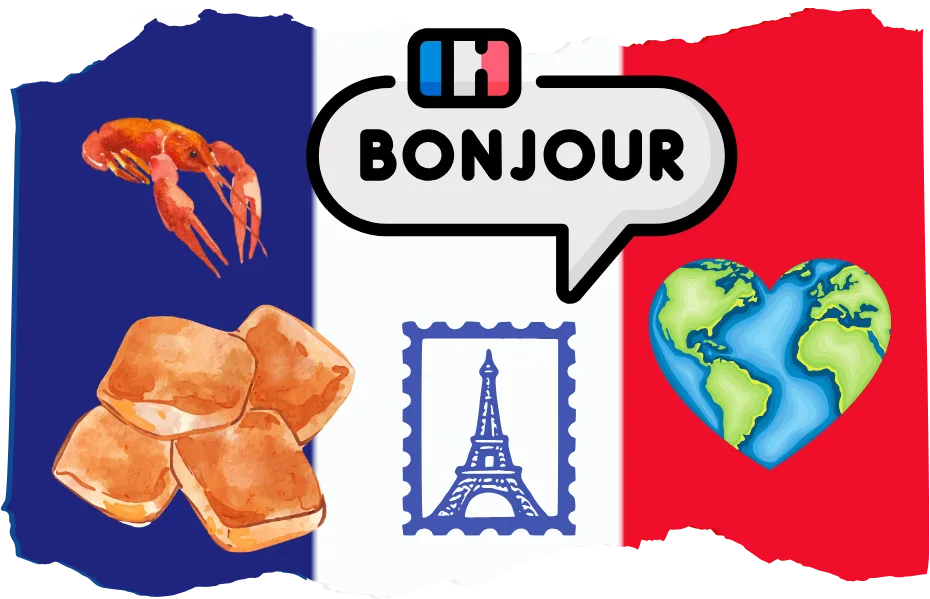
a clipart collage for International Francophonie Day featuring a heart shaped globe, eiffel tower stamp, beignets, a crawfish, and the word bonjour in a speech bubble on a blue, white, red background
Bonjour, World!
📌 Quick Facts📅 March 20🌍 Celebrated Worldwide French is an official language in 29 countries!
❤️ Why We Celebrate

Bonjour, Paris! But French doesn't stop in France. International Francophonie Day celebrates the French language and the many communities around the world that use it. A francophone is someone who speaks French, whether it is their first language or one of several they use. Today, we'll follow French across oceans, discover borrowed words hiding in English, and try hearing and using a little French ourselves.

💡 Did You Know?

🇫🇷 About one-third of English vocabulary has French origins, so you may be speaking a little French without even realizing it!

✨ Adventure Highlights
✏️ Vocabulary 🗺️ Francophone Geography 🔤 French Loanwords 🍽️ Food Traditions


1

Read

📖

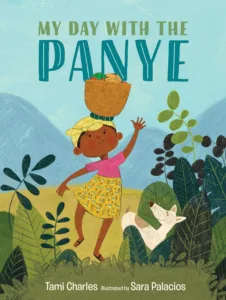
My Day with the Panye

by Tami Charles

Follow Fallon and her mother through a market day in Haiti as Fallon learns to carry a woven basket called a panye. Vibrant illustrations and Haitian Creole words and phrases invite us into the story’s language and family traditions, opening a window into the Francophone world beyond France.

A Little Language Discovery: What Is a Creole?

A creole language develops through contact between people who speak different languages and becomes a community’s everyday language, with its own grammar and vocabulary. Haitian Creole and Louisiana Creole, spoken in parts of the southern United States, both have strong French roots. They are distinct languages, each shaped by its own communities and history.

As You Read: Notice a Haitian Creole word or phrase in the story. Can the pictures and surrounding sentences help you figure out what it means?
📖 View Book
2

Write

✏️
French has shaped English in surprising ways. Explore a list of French-influenced English words and choose at least three words that catch your attention. Then write a short paragraph, scene, or mini story that uses all three words naturally.

The Three-Word French Challenge

There are so many French words hiding in everyday English: ballet, café, chef, costume, garage, menu, picnic, restaurant, souvenir, bouquet, and many more. Explore this Kiddle list of French-influenced English words and choose three words that catch your attention.

You might choose words from the same category, such as tennis, champion, and court, or mix things up with words such as toast, chair, and budget.

Can you make your three words belong in the same scene?

For example:

The champion dropped her toast on the chair just as the tennis match began.

Then keep going. Where is she? Why is she eating toast at a tennis match? What happens next?


3

Play

🎉
French Friday family activity

Hear French, See French, Try French

Have a little French Friday*, whatever day of the week it happens to be! Set aside 10–20 minutes and choose one or two experiences below. Nobody needs to understand every word.

  • 🎥 Watch French in action. Try Mickey Mouse in Croissant de Triomphe. Watch the characters’ expressions and actions. What can you figure out before you understand the words?
  • 🍽️ Explore a menu. Open Ashton’s French-language poutine menu, from Québec, Canada. Use the photos and familiar-looking words to choose something you’d order. Then check a translation together.
  • 🎵 Listen to a song. Try the traditional French song Frère Jacques. Listen once, then play it again and join in with a repeated line. Can you hear the same words returning?
  • 🥐 Sample slower French. Explore Easy French on YouTube. This episode on the yummiest croissants is a fun one!  Listen for a familiar name or word, then check the transcript.
  • 🗨️ Try a phrase. Say bonjour (hello), merci (thank you), or s’il vous plaît (please) during a snack or meal. See whether everyone can use one phrase before the day ends.

*A Note from Laela 🇫🇷
My oldest daughter dreams of traveling to Paris after graduation, so she’s learning French now! We’ve been using Pimsleur and really enjoying it. If this adventure makes you want to keep learning too, you can try their free trial and see what you think. Explore French with Pimsleur


💜 Resources We Love · Some links are affiliate links that support DUYW at no extra cost to you.

Every adventure has another path to follow. Choose a trail and see where your curiosity leads!

Geography Trail: French Beyond France

Start in 🇫🇷 France, then follow French to Québec in 🇨🇦 Canada, 🇸🇳 Senegal in West Africa, and 🇭🇹 Haiti in the Caribbean. These places share a connection to French, but their landscapes, histories, and everyday languages differ. French may be used at home, in school, or at work, often alongside other languages.

Wonder Challenge: Explore the World Explorer Map to see how far apart these places are. Which two lie on opposite sides of the Atlantic Ocean? Which country shares an island with another country?

Language Trail: French Hiding in English

You don’t have to say bonjour to use a word borrowed from French. English borrowed ballet, garage, and souvenir too! A borrowed word is called a loanword, although nobody has to give it back. People carry words between languages through travel, trade, books, and everyday contact. A dictionary’s “Word History” section can help you follow the trail. Start with the story of garage.

Wonder Challenge: Choose ballet, garage, or souvenir. Listen to the word in English and French using a dictionary’s audio. What sounds stay similar, and what changes?

Culture Trail: One Language, Different Tables

A connection to French doesn’t mean everyone eats the same dinner. In Québec, 🇨🇦 Canada, poutine combines fries, cheese curds, and gravy. In 🇸🇳 Senegal, ceebu jën is a rice-and-fish dish with vegetables, with recipes that vary from place to place. Food carries local traditions as well as flavors. Visit UNESCO’s ceebu jën page to explore photographs and a video of this Senegalese culinary tradition.

Wonder Challenge: Compare a photograph of poutine with one of ceebu jën. Which ingredients do you recognize? Which dish would you most like to taste?

Would you rather...

OR

Print & Plan

Printable Lesson Snapshot

Keep today’s book pick, writing prompt, family activity, and discussion ideas together in one colorful overview.

View & Print This Adventure Perfect for homeschool or classroom planning.

Keep Exploring

Follow French beyond France in this Learning Adventure for grades 2–6. Read a story set in Haiti, give a borrowed word a voice, try a little French together, and explore the places and food traditions connected by a shared language.